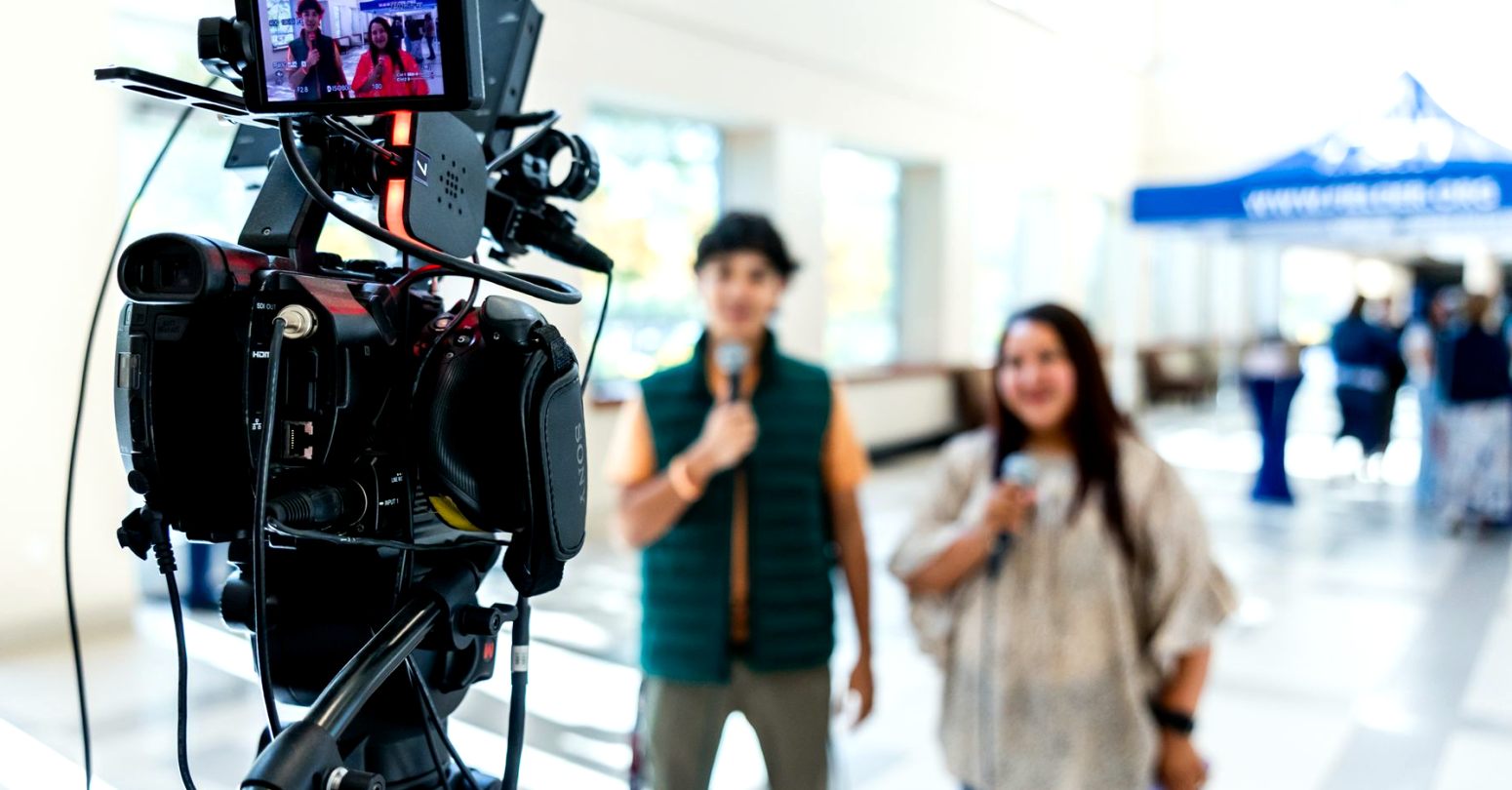
The Kit and Habits Behind Our Camera Technique Days
Part three of our camera technique series looks at the tools, materials and methods we rely on when we teach news shooters framing, handheld movement, exposure and sound.
Why the method matters more than the gear
When we run a camera technique day, the first thing we do is put the equipment list away. A news shooter rarely controls the kit that turns up on a job. One week it is a shoulder camera with a decent zoom, the next it is whatever the station has left on the shelf. So we teach habits that survive a change of camera: how you hold your breath on a long handheld shot, where you stand before you lift the camera, how you check the frame before you press record.
Daniel Okafor, our lead camera operator, writes these notes from the perspective of someone who has shot in car parks, council chambers and flooded lanes. The pattern is the same everywhere. People who rely on the method come back with usable pictures. People who rely on the settings menu come back with a lot of apologies. In these autumn weeks, with the light going early, that difference shows up quickly.
The tools we bring to every training day
Our kit for a training day is deliberately modest. We bring shoulder-mounted and compact broadcast cameras, a fluid-head tripod, a monopod, a set of lavalier and stick microphones, closed-back headphones and a small field monitor. We also bring a grey card, a few lengths of gaffer tape and a pile of laminated shot cards. None of it is exotic, and that is the point: trainees should be able to recognise every item from their own newsroom cupboard.
The monitor and headphones do the most teaching. A shooter who can see exposure and hear the audio properly makes better decisions in the moment than one who trusts the viewfinder alone. We ask everyone to wear headphones for the whole day, including during the lunch walk, because hearing how a street sounds is the quickest way to learn why a clean sound bite is hard to get.
- Shoulder camera and compact broadcast camera
- Fluid-head tripod and monopod
- Lavalier and stick microphones with headphones
- Field monitor, grey card and laminated shot cards
Framing and handheld movement as a physical skill
Handheld work is physical, and we teach it that way. We start with stance: feet apart, weight slightly forward, elbows tucked in, the camera braced against the shoulder and the cheek. Then we practise slow walks, pans that begin and end on a held frame, and the small step back that rescues a shot when the subject moves. Trainees do the same exercise ten times until the movement stops looking like an effort.
We use shot cards rather than lectures for framing. Each card names one job, such as a wide establishing shot, a tight detail, a reaction or a cutaway, and the group has to bring back a clean version of it in a few minutes. This mirrors how a package is actually built. An editor needs variety and clean in and out points, and a shooter who thinks about the edit while filming saves everyone time later.
- Stance and bracing before any movement
- Pans that start and finish on a steady frame
- Shot cards for wide, tight, reaction and cutaway
Exposure and the grey card
Exposure is where most newcomers lose confidence, so we make it routine. Every exterior exercise begins with the grey card held in the same light as the subject. We set exposure and white balance from it, then check the result on the field monitor using zebras and the waveform. After a few repetitions, trainees begin to read the sky and the shadows before they touch a dial.
Mid autumn gives us useful material. Low sun, hard shadows under bare trees and sudden cloud mean the light changes within a single interview. We show how to expose for the face rather than the background, when to move the subject rather than the lights, and when a slightly soft, overcast look is simply the honest picture. The aim is a frame an editor can use without apology.
Sound is half the picture
We spend a full session on sound because poor audio sends more footage to the bin than poor pictures do. Trainees learn to place a lavalier under the collar, to angle a stick microphone just below the chin line, and to monitor with headphones throughout. We also record a short stretch of room tone or street ambience at every location, since editors depend on it to smooth cuts.
The method is simple and repeatable. Check levels before the question, not during the answer. Listen for wind, traffic, refrigeration hum and clothing rustle. If the background wins, move the interview. A fifteen-second relocation almost always beats ten minutes of cleaning up in the edit, and it is a habit trainees can carry into any newsroom they work in.
- Lavalier placement and cable strain relief
- Levels checked before the question
- Room tone recorded at every location
How we check that the habits stick
At the end of each day we run a short live exercise. Trainees receive a mock brief, film a stand-up and two cutaways, record a sound bite and hand over their cards. We review the clips together on a monitor, looking at focus, exposure, steadiness and audio, and we write down one thing each person did well and one thing to practise.
We do not hand out certificates or promise outcomes. What we offer is a plain list of habits, a set of shot cards the team can keep, and notes from the review. Teams tell us the cards end up taped inside camera bags, which is exactly where they belong.
The tools we use on a camera technique day are ordinary on purpose. A camera, a tripod, a grey card, a monitor and a pair of headphones will teach more than any list of settings, provided the habits around them are practised until they are automatic. If your team shoots news, start with stance, exposure from the card and sound you can trust. The pictures follow from there.
More from the News Desk
-
Before You Book a Camera Technique Day: A Checklist for News Teams
Six questions to settle before committing a crew to a hands-on camera training day: who attends, what kit comes, which skills matter, where it is held and what happens afterwards.
-
One Newsroom Camera Day: How Marcus Went From Shaky Exteriors to Steady Packages
A regional reporter named Marcus spent a day with our lead operator learning framing, handheld movement, exposure and sound. This is how his footage changed once he was back in the field.